
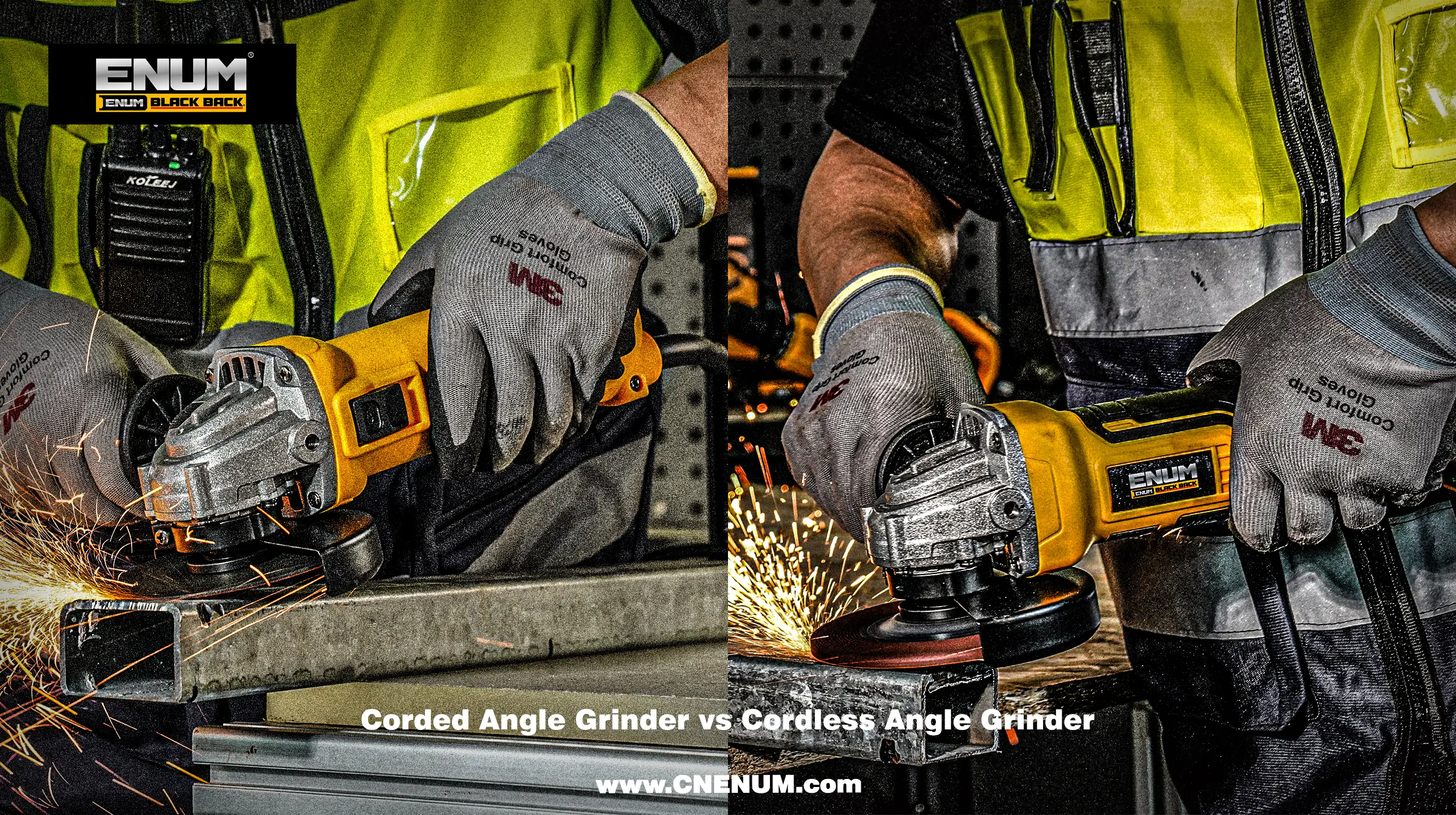
Engaging Introduction
If you cut rebar, grind welds, or carve wood, you probably use an angle grinder almost every day.It is one of the most useful tools in a workshop, but it can also be one of the most dangerous.When you decide to upgrade your grinder in 2025, you face a key choice. Should you choose a cordless tool with a battery, or stay with a corded model that plugs into the wall?This question has become more important in recent years. Battery tools have improved a lot and can now handle jobs that used to require a corded grinder.
There is no single answer that works for everyone. The best option depends on how long you work, where you work, and how much money you want to spend.Some people need a grinder that can run all day without stopping. Others need a tool that is easy to carry onto a roof or into a tight space.In this guide, we compare both types of grinders. By the end, you will know which one fits your work style best.
Quick Comparison Table
Feature / Metric | Corded Angle Grinders | Cordless Angle Grinders |
Power Source | 120V / 240V AC wall outlet | 12V–60V lithium-ion batteries |
Runtime Capacity | Unlimited runtime while plugged in | About 20–45 minutes per charge |
Mobility & Portability | Limited by extension cord length | Very portable and easy to move |
Weight & Ergonomics | Lighter tool body but cords can drag | Heavier because of battery |
Initial Cost | Lower ($80–$200 for pro models) | Higher ($200–$450+ with batteries) |
Long-Term Cost | Very low maintenance cost | Batteries replaced every 3–5 years |
Best Fit For | Shops and long grinding jobs | Mobile work and quick cutting |
Deep Dive – Corded Angle Grinders
When you need steady power for long jobs, a corded grinder is hard to beat. It pulls electricity directly from the wall outlet.
Most corded grinders run between 500 watts and 2,500 watts. In North America, that usually means about 11 to 15 amps of current.Because the tool connects to a stable power source, the speed stays strong under pressure. Many grinders spin at 11,000 to 12,000 RPM even when cutting thick metal.This constant power makes corded models perfect for heavy grinding. They work well for cutting stone, removing thick welds, or shaping steel plates.
However, cords create their own problems. The tool can only move as far as the extension cord allows.Dragging a long cord across a job site can be frustrating. It can also create a tripping risk for workers nearby.Using the wrong extension cord can also cause trouble. If the cord is too long or too thin, the voltage drops and the motor may overheat.
Another issue appears on job sites that use GFCI outlets. When the grinder starts, the sudden power spike can sometimes trip the circuit.Even with these issues, corded grinders remain very reliable. Many experienced workers still keep one in their truck for heavy work.If your job requires hours of continuous grinding, the corded option still wins. It delivers steady power all day.
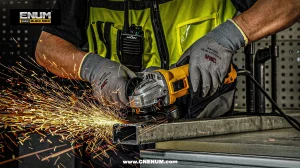
The new-generation 4.5-inch High-Performance Corded Brushed Angle Grinder (Model 4032) is meticulously engineered by the ENUM Team, designed to be your reliable “Efficiency Partner” and redefine the professional standard for compact angle grinders. Its core lies in the deeply optimized high-performance brushed motor system, achieving powerful starting torque for effortless handling of heavy-duty tasks through precision design and premium materials. Enhanced heat dissipation and pure copper winding ensure consistent, stable output during prolonged operation, while specially formulated high-wear-resistant carbon brushes with easy-replacement design significantly boost durability and maintenance convenience. In terms of ergonomics and safety, the lightweight, compact body and contoured grip minimize fatigue during extended use. The adjustable main and auxiliary handles allow for secure two-handed operation and precise control, complemented by a standard high-strength adjustable guard and overload protection for comprehensive safety. The grinder comes standard with a versatile metal cutting/grinding disc, and its standard interface is widely compatible with a range of accessories up to 4.5 inches (115mm), making it fully capable of handling multi-scenario professional needs such as metal fabrication, stone work, and surface cleaning. It is the ideal choice for professionals and serious DIY users who demand robust power, reliable durability, and safe, controlled operation. For more detailed information about Model 4032, please contact the ENUM Team.
Deep Dive – Cordless Angle Grinders
Cordless grinders shine when you need freedom of movement. You can grab the tool and start working without searching for a power outlet.This flexibility makes a big difference in tight or high places. It is especially helpful when working on ladders, scaffolds, or vehicles.
Modern cordless grinders are much stronger than older models. Brushless motors and improved batteries allow them to produce serious power.Some high-voltage systems can deliver more than 2,000 watts of output. That is similar to a heavy-duty corded grinder.
Still, battery life remains the biggest limit. Grinding creates a lot of friction and uses energy very quickly.Under heavy load, a battery may last only 20 to 45 minutes of trigger time. Heat can also build up during long grinding sessions.Most cordless grinders include electronic protection systems. These systems shut the tool down before the battery overheats.To work all day with a cordless system, you need multiple batteries. One battery runs the tool while another charges.
Weight is another factor to consider. Large batteries add noticeable weight to the tool.However, many workers accept the extra weight. The freedom from cords often makes the job easier and safer.
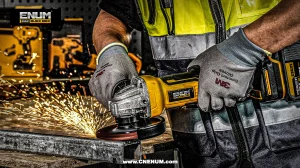
The new-generation 4503 Cordless Brushless Angle Grinder, developed by the ENUM Team, features a housing made of high-strength nylon material, offering excellent durability, heat resistance, and fatigue resistance in a lightweight yet robust design. Its cordless design liberates users from power outlet constraints, enabling flexible and efficient operation across diverse worksites, workshops, and outdoor environments. At its core, the tool is powered by a proprietary high-performance brushless motor, supported by a three-speed intelligent adjustment function for precise control across tasks ranging from fine finishing to heavy-duty cutting. It comes equipped with two 4000mAh lithium-ion batteries and a 2A fast charger, ensuring extended runtime and quick power recovery. Compatible with standard 115mm grinding and cutting discs, the grinder is CE-certified and meets the regulatory standards of multiple countries, making it suitable for professional construction, maintenance, and demanding DIY applications. For more product details, please contact the ENUM Team.
Head-to-Head Performance Comparison (Realistic Situations)
Specifications on a box only tell part of the story. Real work situations show the true strengths of each tool.
Scenario 1: Heavy Metal Fabrication and Weld Prep
Imagine building a custom steel trailer in a shop. You must grind down thick welds and shape steel plates for several hours.In this case, a corded grinder clearly performs better. Continuous grinding drains cordless batteries too quickly.A strong corded grinder can run all afternoon. It keeps the same speed and torque the entire time.
Winner: Corded
Scenario 2: Concrete and Masonry Surfacing
Now picture leveling a concrete patio using a diamond cup wheel. This task creates heavy dust and requires high torque.Corded grinders provide the runtime needed for the job. However, dust can damage internal parts of some motors.Many cordless grinders use sealed electronics and screens to block dust. Still, concrete grinding drains batteries extremely fast.The best setup usually combines a corded grinder with a dust shroud and vacuum. This keeps the tool cool and reduces harmful silica dust.
Winner: Corded (with dust extraction)
Scenario 3: Mobile Repairs and High-Angle Work
Imagine cutting rebar while standing on scaffolding. Carrying an extension cord up a ladder can be dangerous.A cordless grinder solves this problem immediately. It removes the trip hazard and allows faster movement.Modern cordless tools have enough power for quick cutting tasks. They can easily slice rebar, bolts, and small steel parts.Because the cuts are short, battery life is not a major issue. The convenience makes a big difference.
Winner: Cordless
Scenario 4: Wood Carving and Power Sanding
Woodworkers frequently use specialized carving discs (like Arbortech) and flap discs Many woodworkers use angle grinders with carving or sanding discs. These tools help shape bowls and smooth large wood slabs.Cords can drag across the wood surface during delicate work. That can scratch a finished piece.Cordless grinders allow smoother movement around the project. They also make it easy to step outside and keep dust out of the shop.For artistic woodworking tasks, this freedom improves control. The tool feels easier to handle during long carving motions.
Winner: Cordless
Conclusion
The choice between corded and cordless grinders comes down to endurance versus mobility. Each type solves a different problem.
Corded grinders deliver nonstop power. They work best for long grinding jobs in a fixed workspace.
Cordless grinders provide unmatched freedom. They are ideal for quick cuts, mobile repairs, and tight locations.
Many professionals choose to own both tools. A corded grinder stays in the workshop for heavy tasks.Meanwhile, a cordless grinder rides in the truck for fast and flexible work. This hybrid approach gives you the best of both worlds.